
10B33 is the SAE 1033 base grade with a small boron addition: 0.30–0.36% carbon, 0.70–1.00% manganese and 0.0005–0.003% boron. The boron raises hardenability, so a plain medium carbon steel can reach through-hardness in fasteners without costly alloying. It is used for Class 10.9 and 12.9 bolts, cold-forged fasteners, studs and pins.
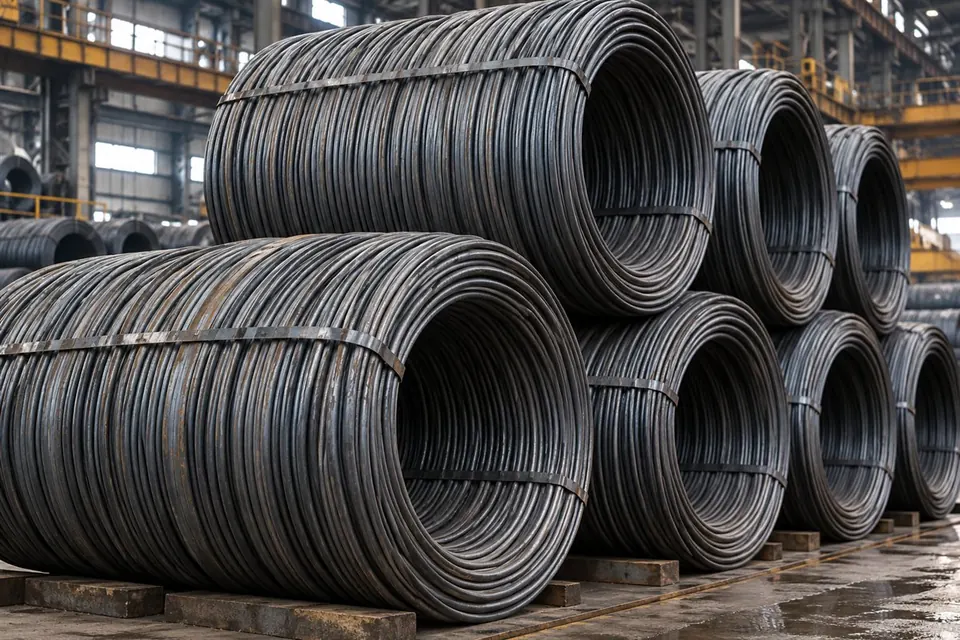
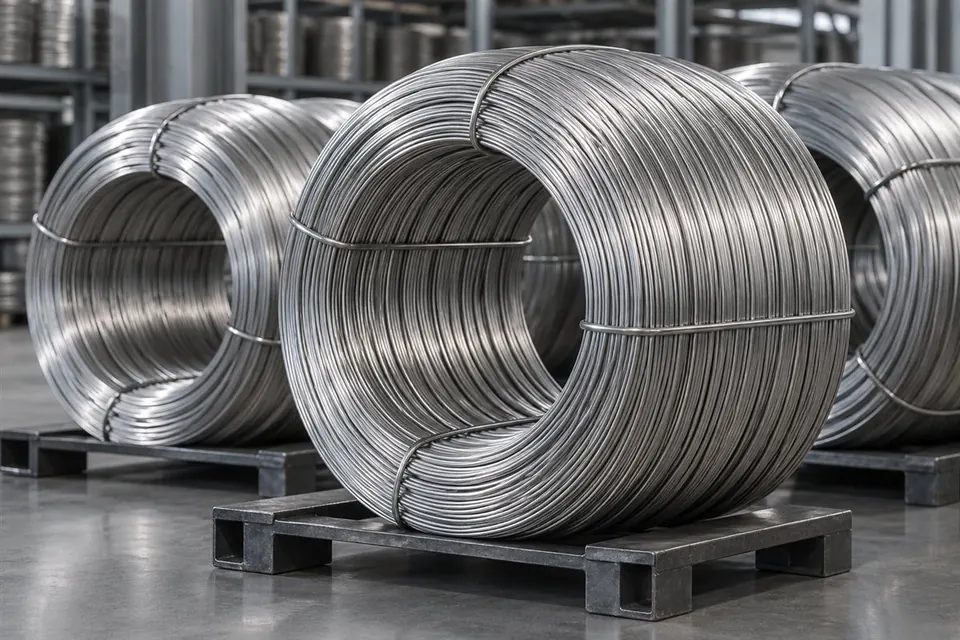
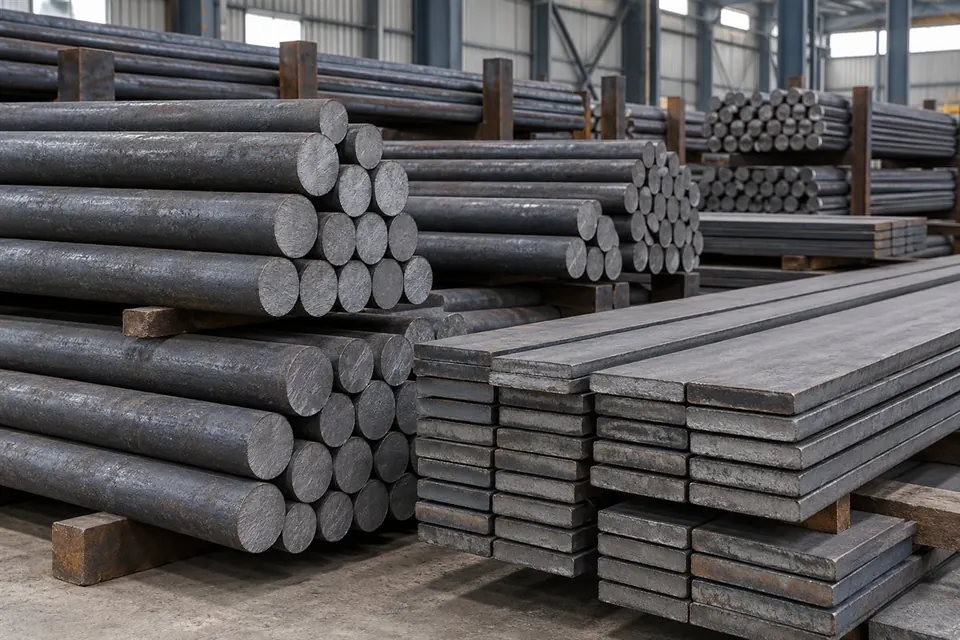
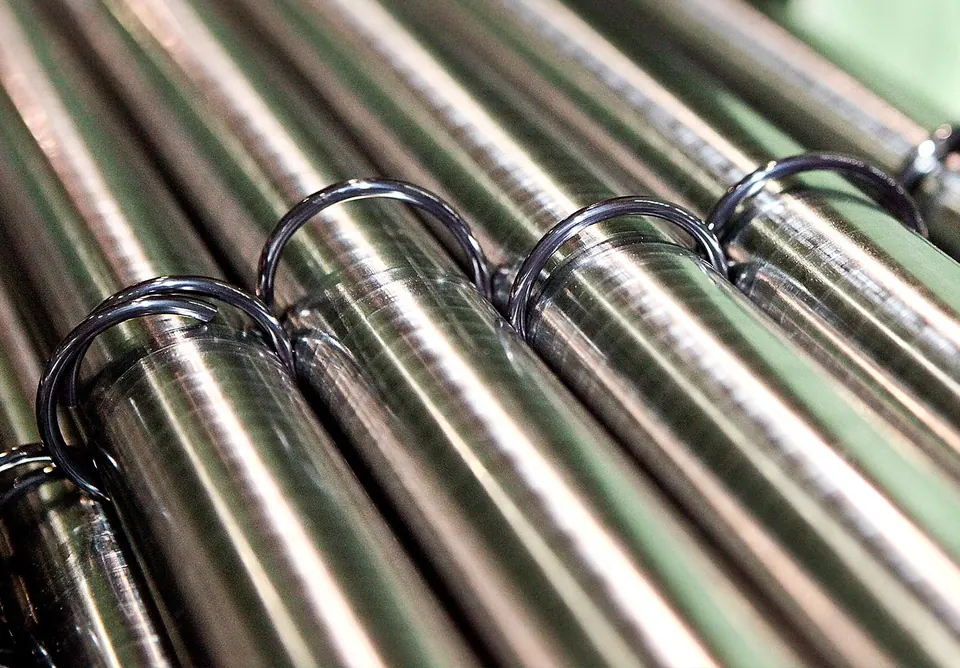
OneKaizen supplies 10B33 as wire rods in Ø 5.5–40 mm, bright wires in Ø 1.5–37 mm, round bars in Ø 16–500 mm and bright bars in Ø 8–160 mm, sourced from Indian and international mills. Delivery condition is your choice: hot rolled wire rod, spheroidise annealed for cold heading, drawn, or hot rolled bars. Every consignment ships with a mill test certificate.
EQUIVALENT GRADES
10B33 Equivalents
Direct means the same grade under another name. Close means the same alloy concept with slightly different limits, commonly substituted. Approximate means similar use with real differences: check with us before substituting.
| Standard | Designation | Match |
|---|---|---|
| AISI/SAE | 10B33 | Direct |
10B33 Chemical Composition
Per SAE J403 (SAE 10B33) - base grade 1033 plus boron
| Element | Range, wt % | Range chart |
|---|---|---|
| C | 0.3 – 0.36 | |
| Mn | 0.7 – 1 | |
| B | 0.0005 – 0.003 |
Delivery Condition and Heat Treatment
10B33 is normally spheroidise annealed before cold heading, which softens the steel and improves its cold forgeability. After forming, the fasteners are austenitised, quenched and tempered to reach the strength class required.
Boron is effective only in very small amounts and only when it is free in the steel, so the mill protects it from nitrogen with titanium or aluminium. This is why boron grades need a reliable source and a chemistry check on every heat. Boron also loses its effect if the steel is held too long at high temperature.
Welding is not the normal route for this grade. It is used for cold-headed and forged parts, and the hardenability that helps in heat treatment makes welded joints hard and crack-prone unless pre-heat and post-heat are controlled.
What We Supply 10B33 In
Where 10B33 Is Used
Industries: Fasteners, Automotive, Agricultural equipment, Construction and mining equipment, Cold forging
Compare 10B33 with Similar Grades
10B33 Questions
Is 10B33 the same as 33B2?
No. EN 10263-4 33B2 is comparable in carbon level but it is not an exact equivalent, and the manganese and boron bands differ. 10B33 has no exact EN or JIS equivalent. Tell us whether your drawing names the SAE grade or the EN grade and we confirm what the mill can supply.
What is the difference between 10B33 and 10B35?
10B35 has slightly higher carbon (0.32–0.38% against 0.30–0.36%) and slightly lower manganese. It reaches higher strength after quenching and tempering, so it suits the top of the Class 12.9 range. 10B33 is the choice for Class 10.9 and for parts that need more cold-forming margin.
What is the difference between 10B33 and SAE 1033?
The base chemistry is the same. The boron addition gives 10B33 much higher hardenability, so the core of a thick fastener hardens through. Plain SAE 1033 does not harden as deeply.
Can 10B33 be heat treated or welded?
Yes, it is quenched and tempered after cold heading to reach the strength class. We do not recommend welding without controlled pre-heat and post-heat.
What is 10B33 used for?
Class 10.9 and 12.9 bolts, cold-forged fasteners, studs and pins, mainly for automotive, agricultural, construction and mining equipment. OneKaizen also machines parts to drawing through partner machine shops.
What is the minimum order for 10B33?
3 tonnes, flexible depending on size and your situation. Send us your size, condition and quantity and we confirm availability and delivery.
What is 10B33 equivalent to?
10B33 is the same grade as AISI/SAE 10B33.
In which forms do you supply 10B33?
OneKaizen supplies 10B33 as Wire Rods, Bright Wires, Round Bars, Bright Bars, delivered across India and exported to buyers abroad.
Do you supply 10B33 with a mill test certificate?
Yes. Every lot ships with an EN 10204 3.1 mill test certificate showing chemistry and mechanical properties, traceable to the heat number.
Data compiled by the OneKaizen metallurgy team from the standards named above. Updated 27 October 2026. Equivalents are nearest matches; confirm critical substitutions against the governing standard and mill certificate.