
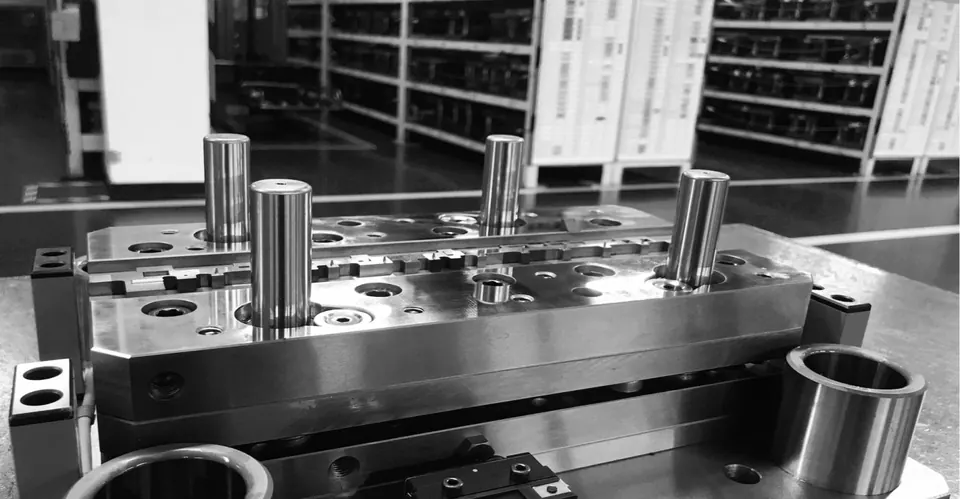
D2 is a cold work tool steel with 1.4–1.6% carbon and 11–13% chromium, plus molybdenum and vanadium. The chromium carbides give it high wear resistance and edge retention. Annealed it machines at a maximum of 255 HB, and hardened and tempered it reaches 58–62 HRC. Toolmakers choose it for blanking and punching dies, thread rolling dies, slitter knives and shear blades, forming rolls, gauges and wear plates.
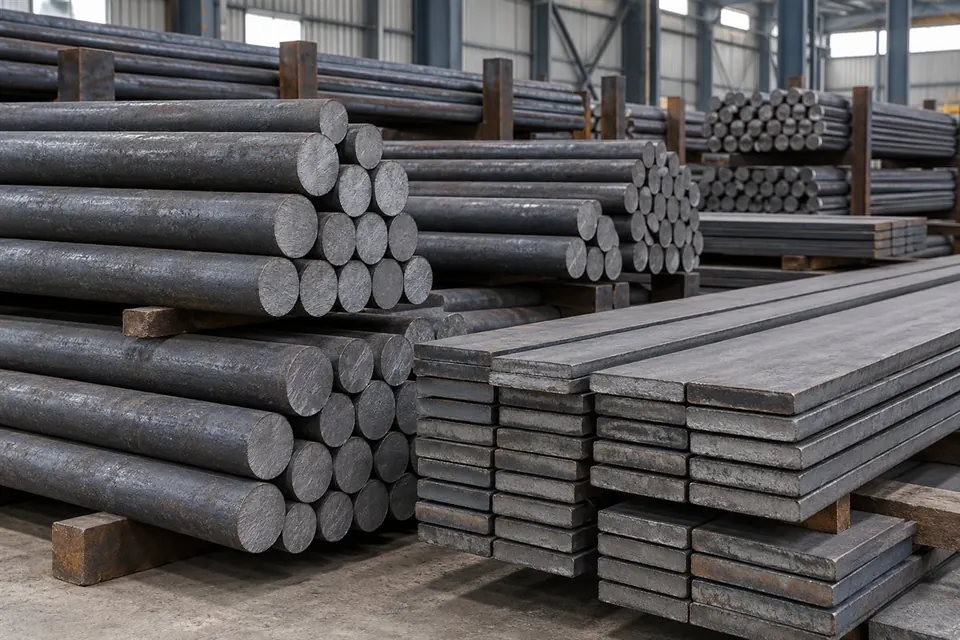
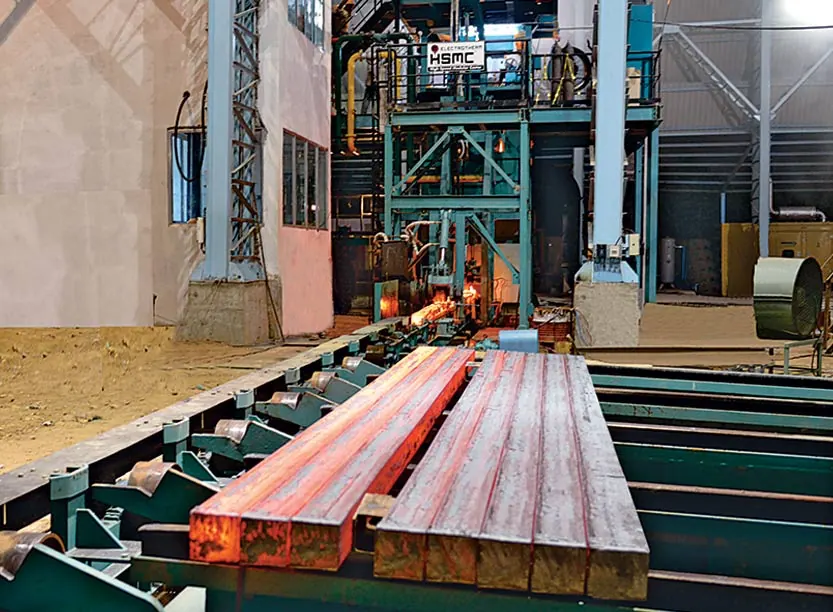
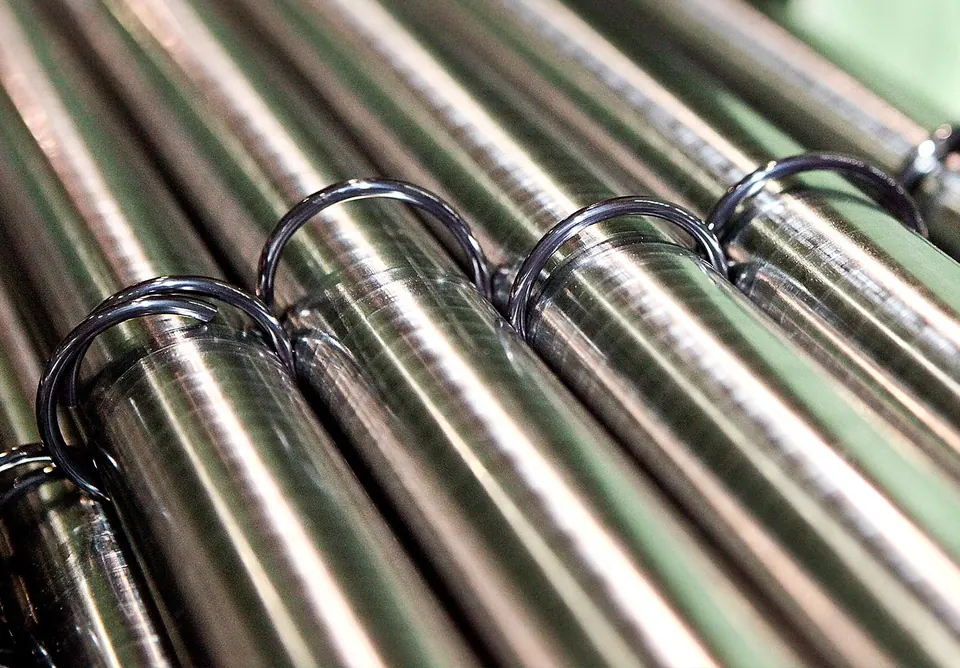
OneKaizen sources D2 from specialist steel mills and forging partners and supplies it as tool and die steel rounds in Ø 20–500 mm and flats 10–500 mm thick, cuts to your size. We also supply rolled round bars in Ø 16–500 mm, forged bars in Ø 250–1,030 mm and bright bars in Ø 8–160 mm. Delivery condition is annealed, or hardened and tempered on request. Send us your size and quantity and we quote by quantity and size.
EQUIVALENT GRADES
D2 Equivalents
Direct means the same grade under another name. Close means the same alloy concept with slightly different limits, commonly substituted. Approximate means similar use with real differences: check with us before substituting.
| Standard | Designation | Match |
|---|---|---|
| EN | X153CrMoV12 (1.2379) | Close |
| DIN W.Nr. | 1.2379 | Close |
| AISI/SAE | D2 | Direct |
| UNS | T30402 | Direct |
| JIS | SKD11 | Direct |
| KS | STD11 | Direct |
| GB | Cr12Mo1V1 | Direct |
| UNI | X155CrVMo12-1 | Direct |
| UNE | X155CrVMo12-1 | Direct |
| TS | X153CrMoV12 | Close |
D2 Chemical Composition
Per ASTM A681 (D2)
| Element | Range, wt % | Range chart |
|---|---|---|
| C | 1.4 – 1.6 | |
| Mn | ≤ 0.6 | |
| Si | ≤ 0.6 | |
| Cr | 11 – 13 | |
| Mo | 0.7 – 1.2 | |
| V | ≤ 1.1 |
D2 and Its Equivalents: Chemical Composition
Equivalent grades are written to different standards, so their limits differ slightly. Use the column for the standard on your drawing or purchase order.
| Element | D2 ASTM A681 | X153CrMoV12 (1.2379) EN ISO 4957 | SKD11 JIS G4404 |
|---|---|---|---|
| C % | 1.40–1.60 | 1.50–1.60 | 1.40–1.60 |
| Si % | ≤ 0.60 | 0.10–0.60 | ≤ 0.40 |
| Mn % | ≤ 0.60 | 0.15–0.45 | ≤ 0.60 |
| P % | – | ≤ 0.03 | ≤ 0.03 |
| S % | – | ≤ 0.03 | ≤ 0.03 |
| Cr % | 11.00–13.00 | 11.00–12.00 | 11.00–13.00 |
| Mo % | 0.70–1.20 | 0.60–0.80 | 0.80–1.20 |
| V % | ≤ 1.10 | 0.90–1.10 | 0.20–0.50 |
D2 Mechanical Properties
| Condition | Tensile, MPa | Yield min, MPa | Elongation min, % | Hardness |
|---|---|---|---|---|
| Annealed | – | – | – | max 255 HB |
| Hardened & tempered | – | – | – | 58-62 HRC |
Delivery Condition and Heat Treatment
D2 is delivered annealed, at a maximum of 255 HB, so you rough and finish machine it soft. Typical practice is to harden from about 1,010–1,040 °C, cool in air or oil, then temper at least twice. Lower tempering keeps hardness near 62 HRC; higher tempering trades hardness for toughness. The working range is 58–62 HRC.
If you want to skip your own heat treatment, we supply D2 hardened and tempered on request. Grinding after hardening is normal for dies. D2 grinds more slowly than a plain tool steel because of its carbides, so leave a sensible grinding allowance.
D2 is not a weld-friendly grade. The high carbon and chromium content make it crack-prone. A repair needs preheat, a matching rod and a stress relief, so plan on replacing the part instead.
What We Supply D2 In
Where D2 Is Used
Industries: Tool and die, Automotive, Sheet metal stamping, Packaging
Compare D2 with Similar Grades
| D2 | D3 | A2 | H13 | |
|---|---|---|---|---|
| Why consider it | This grade | Higher carbon, more wear resistance, lower toughness | Tougher, air hardening, less wear resistance | For hot work instead of cold work |
| C % | 1.4–1.6 | 2–2.35 | 0.95–1.05 | 0.32–0.45 |
| Mn % | ≤ 0.6 | ≤ 0.6 | ≤ 1 | 0.2–0.6 |
| Si % | ≤ 0.6 | ≤ 0.6 | ≤ 0.5 | 0.8–1.2 |
| Cr % | 11–13 | 11–13.5 | 4.75–5.5 | 4.75–5.5 |
| Mo % | 0.7–1.2 | – | 0.9–1.4 | 1.1–1.75 |
| V % | ≤ 1.1 | ≤ 1 | 0.15–0.5 | 0.8–1.2 |
D2 Questions
What is the difference between D2 and H13?
D2 is a cold work steel and H13 is a hot work steel. D2 has 1.4–1.6% carbon and 11–13% chromium for wear resistance at room temperature, at 58–62 HRC. H13 has 0.32–0.45% carbon and 4.75–5.5% chromium and works at 44–52 HRC, with better toughness and heat resistance.
Is D2 the same as 1.2379 and SKD11?
SKD11 is a direct match for D2. 1.2379 (X153CrMoV12) is a close equivalent, not an identical one, because the EN ISO 4957 limits differ from ASTM A681. Most buyers treat them as interchangeable; tell us if your drawing needs the exact EN chemistry.
What hardness does D2 reach after heat treatment?
58–62 HRC hardened and tempered. Annealed D2 is supplied at a maximum of 255 HB. Tell us the hardness your die needs and we supply it hardened and tempered on request.
What is the difference between D2 and A2?
A2 is tougher and air hardening, with less wear resistance. D2 resists wear better but chips more easily. Use D2 for long runs on abrasive sheet and A2 where the tool takes impact.
Can D2 be machined and welded?
Machine it annealed, at a maximum of 255 HB. Welding is not recommended because of the high carbon and chromium. Heavy grinding after hardening is normal.
What is the minimum order for D2 tool steel?
OneKaizen quotes by quantity and size. Send us your form, size, condition and quantity and we come back with the supply plan and price.
What is D2 equivalent to?
D2 is the same grade as AISI/SAE D2, UNS T30402, JIS SKD11, KS STD11. Close equivalents are DIN W.Nr. 1.2379, EN X153CrMoV12, TS X153CrMoV12.
In which forms do you supply D2?
OneKaizen supplies D2 as Tool & Die Steel, Round Bars, Forged Bars, Bright Bars, delivered across India and exported to buyers abroad.
Do you supply D2 with a mill test certificate?
Yes. Every lot ships with an EN 10204 3.1 mill test certificate showing chemistry and mechanical properties, traceable to the heat number.
Data compiled by the OneKaizen metallurgy team from the standards named above. Updated 26 October 2026. Equivalents are nearest matches; confirm critical substitutions against the governing standard and mill certificate.