
SS 410 is a martensitic stainless steel with 11.5–13.5% chromium and up to 0.15% carbon. Unlike 304 and 316, it hardens by heat treatment and it is magnetic. Annealed bar delivers 485 MPa minimum tensile strength, 275 MPa minimum yield and 20% minimum elongation to ASTM A276 Condition A. Hardened and tempered to EN 10088-3 QT650, 1.4006 reaches 650–850 MPa tensile, 450 MPa minimum yield and 15% minimum elongation. It is used for pump and valve shafts and stems, fasteners, cutlery blanks and steam turbine parts.
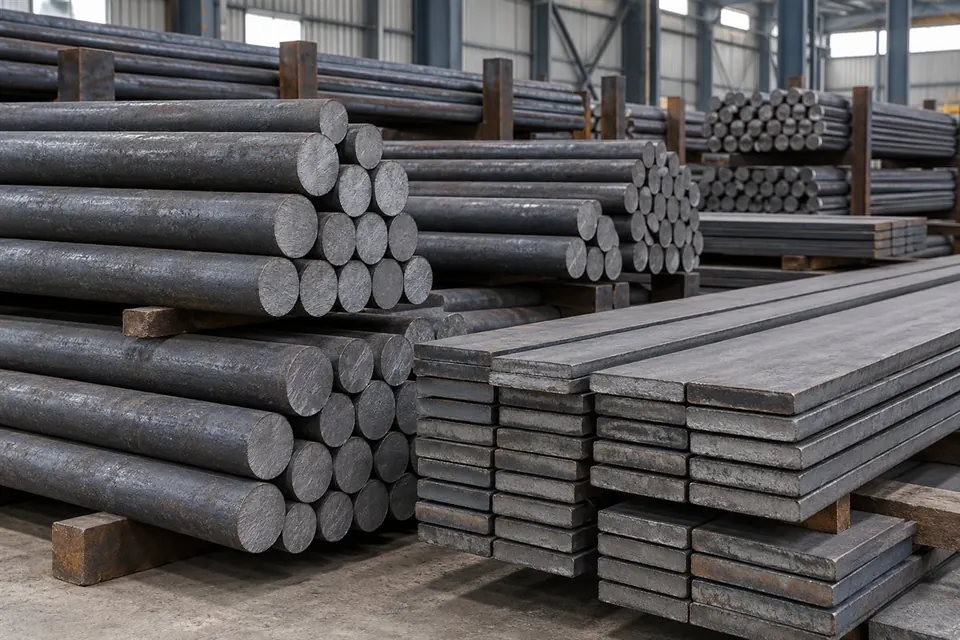
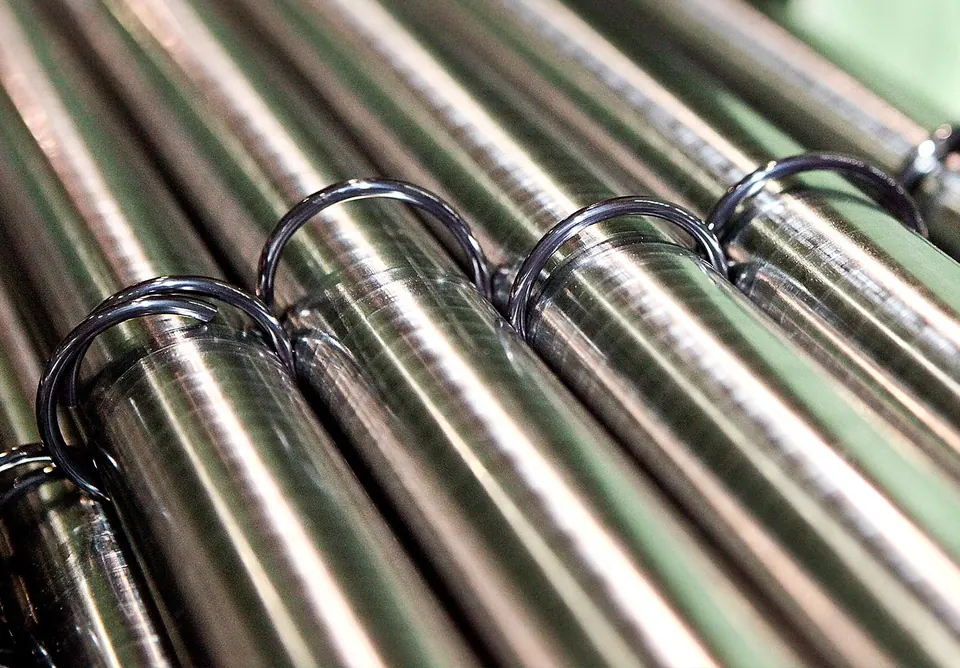
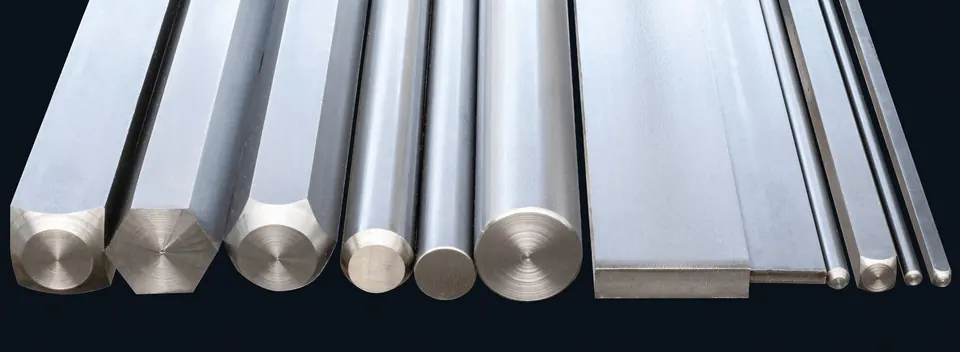
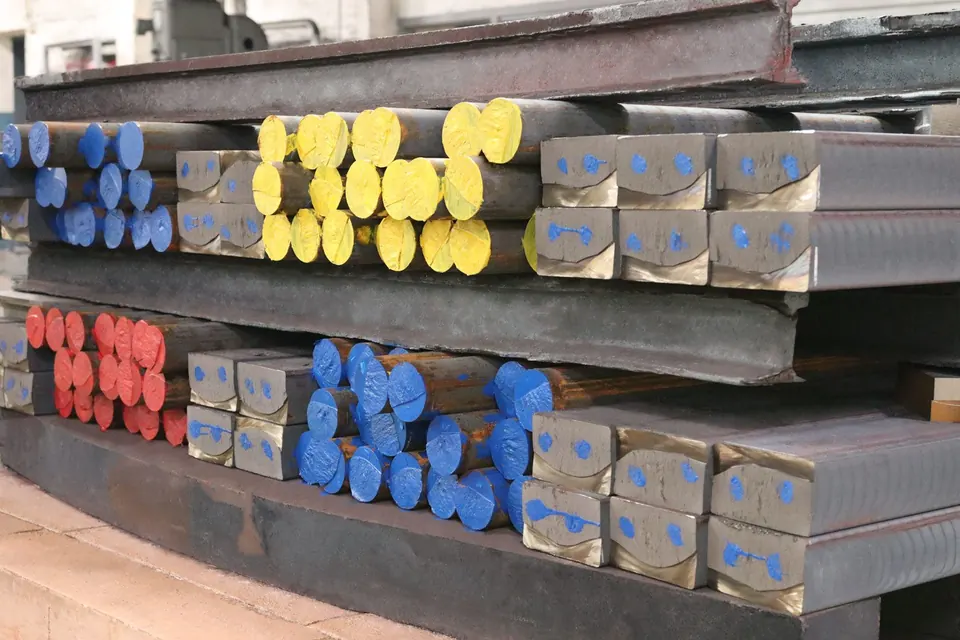
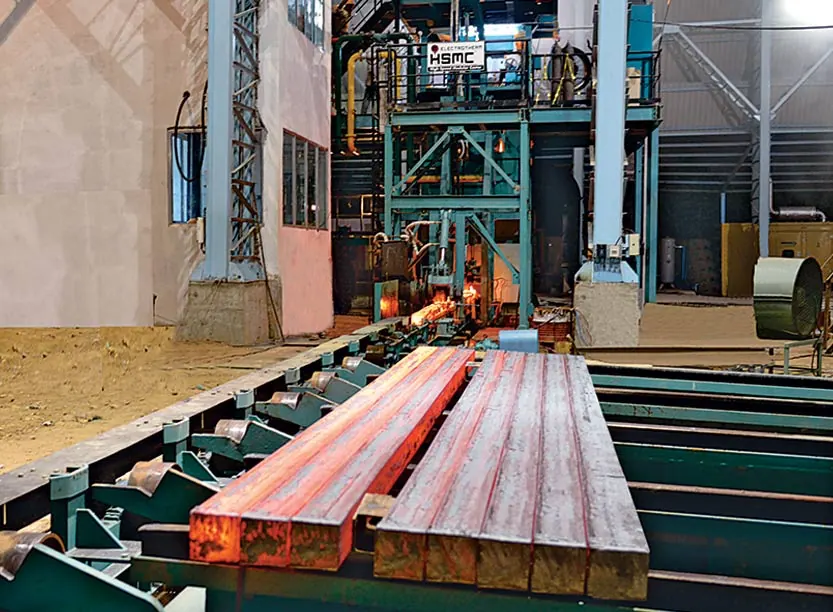
OneKaizen sources SS 410 from India's leading mills and international partner mills and supplies it as rolled round bars in Ø 16–500 mm, bright bars in Ø 8–160 mm, bright hex bars in 18–50 mm AF, hot rolled hex bars in 18–60 mm AF, square bars in 20–480 mm and forged bars in Ø 250–1,030 mm. Delivery condition is your choice: annealed, hardened and tempered, or cold drawn. Every consignment ships with a mill test certificate.
EQUIVALENT GRADES
SS 410 Equivalents
Direct means the same grade under another name. Close means the same alloy concept with slightly different limits, commonly substituted. Approximate means similar use with real differences: check with us before substituting.
| Standard | Designation | Match |
|---|---|---|
| BS 970 | 410S21 | Direct |
| EN | X12Cr13 (1.4006) | Direct |
| DIN W.Nr. | 1.4006 | Direct |
| AISI/SAE | 410 | Direct |
| UNS | S41000 | Direct |
| JIS | SUS410 | Direct |
| KS | STS410 | Direct |
| GB | 12Cr13 | Direct |
| UNI | X12Cr13 | Direct |
| UNE | X12Cr13 | Direct |
| TS | X12Cr13 | Direct |
SS 410 Chemical Composition
Per ASTM A276 (410)
| Element | Range, wt % | Range chart |
|---|---|---|
| C | ≤ 0.15 | |
| Mn | ≤ 1 | |
| Si | ≤ 1 | |
| P | ≤ 0.04 | |
| S | ≤ 0.03 | |
| Cr | 11.5 – 13.5 |
SS 410 and Its Equivalents: Chemical Composition
Equivalent grades are written to different standards, so their limits differ slightly. Use the column for the standard on your drawing or purchase order.
| Element | 410 ASTM A276 | X12Cr13 (1.4006) EN 10088-3 | SUS410 JIS G4303 |
|---|---|---|---|
| C % | ≤ 0.15 | 0.08–0.15 | ≤ 0.15 |
| Si % | ≤ 1.00 | ≤ 1.00 | ≤ 0.75 |
| Mn % | ≤ 1.00 | ≤ 1.50 | ≤ 1.00 |
| P % | ≤ 0.04 | ≤ 0.04 | ≤ 0.04 |
| S % | ≤ 0.03 | ≤ 0.03 | ≤ 0.03 |
| Cr % | 11.50–13.50 | 11.50–13.50 | 11.50–13.50 |
| Ni % | – | ≤ 0.75 | ≤ 0.60 |
SS 410 Mechanical Properties
| Condition | Tensile, MPa | Yield min, MPa | Elongation min, % | Hardness |
|---|---|---|---|---|
| Annealed (ASTM A276 Cond. A) | ≥ 485 | 275 | 20 | – |
| QT650 (EN 10088-3, 1.4006) | 650 – 850 | 450 | 15 | – |
Delivery Condition and Heat Treatment
Typical practice is to harden from about 950–1,000 °C and cool in oil or air, then temper. Tempering sets the balance of strength and toughness. Avoid tempering in the range of roughly 400–580 °C, where toughness and corrosion resistance both fall. If you want to skip your own heat treatment, we supply 410 hardened and tempered to QT650, or annealed for easier machining.
The 12% chromium gives good resistance to the atmosphere, fresh water, steam and mild chemicals, and it is best in the hardened and polished condition. It does not match 304 or 316, and it is not a choice for chlorides or marine service.
SS 410 can be welded, but the heat-affected zone hardens and cracks easily. Preheat to about 200–300 °C and temper after welding. Where the part has to be welded heavily, 304 or 316 is the more practical stainless.
What We Supply SS 410 In
Where SS 410 Is Used
Industries: Oil and gas, Pumps and valves, Power, Cutlery
Compare SS 410 with Similar Grades
| SS 410 | SS 420 | SS 304 / 304L | |
|---|---|---|---|
| Why consider it | This grade | Higher carbon, reaches higher hardness | Better corrosion resistance but not hardenable |
| C % | ≤ 0.15 | ≥ 0.15 | ≤ 0.08 |
| Mn % | ≤ 1 | ≤ 1 | ≤ 2 |
| Si % | ≤ 1 | ≤ 1 | ≤ 1 |
| Cr % | 11.5–13.5 | 12–14 | 18–20 |
| Ni % | – | – | 8–10.5 |
SS 410 Questions
Is SS 410 magnetic?
Yes. SS 410 is martensitic and magnetic in both the annealed and the hardened condition. This is the main practical difference from 304 and 316, which are essentially non-magnetic when annealed.
What is the difference between SS 410 and SS 420?
Carbon. SS 410 has up to 0.15% carbon; SS 420 has 0.15% minimum, so it hardens to a higher level and holds an edge better. 410 machines and welds more easily. Pick 420 for cutlery, blades and wear faces, and 410 for shafts and general parts.
What is the difference between SS 410 and SS 304?
SS 410 hardens by heat treatment, is magnetic and costs less; SS 304 does none of these, but resists corrosion much better. Choose 410 where strength and wear matter more than corrosion, and 304 where corrosion resistance is the priority.
What strength does hardened and tempered SS 410 reach?
To EN 10088-3 QT650, 1.4006 delivers 650–850 MPa tensile, 450 MPa minimum yield and 15% minimum elongation. Other tempering conditions give other strength levels. Tell us the tensile strength or hardness you need and we supply it in that condition.
Can SS 410 be welded?
It can, with care. Preheat before welding and temper afterwards, because the hardened heat-affected zone is crack-prone. If welding is central to the part, 304 or 316 is easier.
What is the minimum order for SS 410 bars?
3 tonnes, flexible depending on grade, size and your situation. Send us your size, condition and quantity, with the form you need: round, bright, hex, square or forged bar.
What is SS 410 equivalent to?
SS 410 is the same grade as AISI/SAE 410, UNS S41000, EN X12Cr13, DIN W.Nr. 1.4006.
In which forms do you supply SS 410?
OneKaizen supplies SS 410 as Round Bars, Bright Bars, Hex Bars, Square Bars, Forged Bars, SS 400 Series, delivered across India and exported to buyers abroad.
Do you supply SS 410 with a mill test certificate?
Yes. Every lot ships with an EN 10204 3.1 mill test certificate showing chemistry and mechanical properties, traceable to the heat number.
Data compiled by the OneKaizen metallurgy team from the standards named above. Updated 26 October 2026. Equivalents are nearest matches; confirm critical substitutions against the governing standard and mill certificate.